


For years, I’ve rented an office next door to a sex shop. In England, the law doesn’t let licensed sex shops flaunt their wares at passers-by; but, from the day they open to the day they close, almost all other retail premises need window displays1. If you worked as a window-cleaner in a town centre for long enough, you’d see businesses come and go; you’d see the displays that attract shoppers and the ones that repel; you’d see the establishments that thrive and the ones that decline.
But I don’t clean windows; I build websites. If you do that for long enough, you experience something similar. Indeed, the death of traditional British high-street commerce is often blamed on the migration of retail and other businesses out of town and online. Business-to-consumer websites are the new shop windows. Since they’re both selling to human beings, you might expect that what works and what doesn’t work in one case would overlap with what works and doesn’t in the other. Maybe there are simple common dos-and-don’ts?
Yes, there are; yes, there aren’t.

For example, the Internet window display that attracts the most retail shoppers on the planet is one that rejects many of the favourite recommendations of professional web designers: Amazon’s.
For example, you might also be surprised at how often sole traders and small-business owners say they want a website, but that they don’t want it to attract new clients.
Websites aren’t only windows. They can be seasonal Oxford-Street flagship-department-store production numbers; they can be discreet engraved wall plaques for professionals; they can be virtual post office boxes; they can be read-only bus-stop hoardings. The variety, richness, and subtlety of the signals that can be sent from seller to buyer via fibre-optics and 5G and HTTP are almost as diverse as those that can be sent from human to human across a room.
We’ve all seen those toe-curling LinkedIn corporate-hustler posts that turn a (probably imaginary) anecdote of everyday life into a glib parable of career advancement. Brace yourself, because I—non-hustling, non-corporate, Anonymous Midlands Industrial Estate geek—am about to do a reverse-LinkedIn on you and turn things wot I have seen at work into glib everyday life advice.
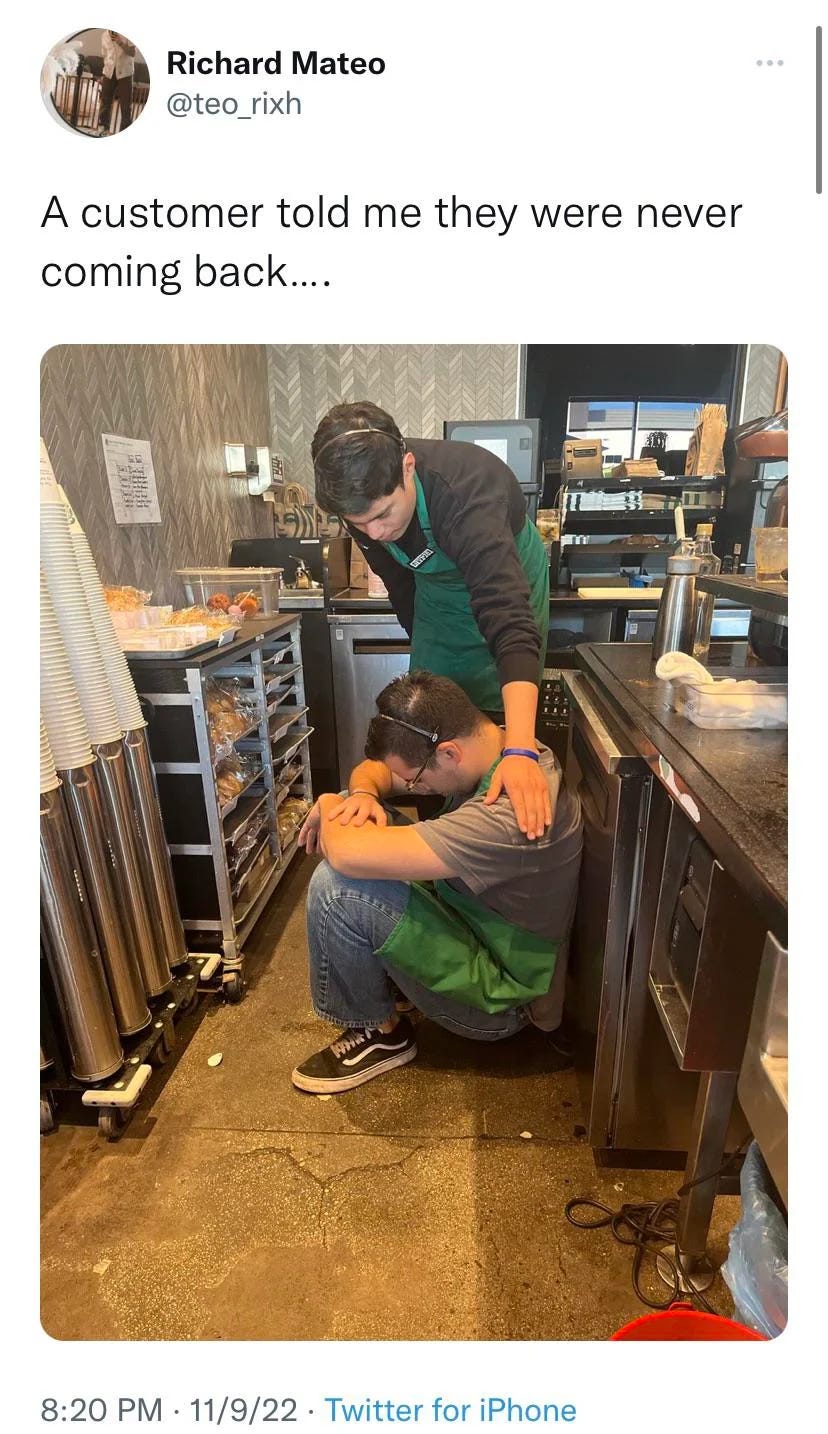
The original parody customer-facing tweet:
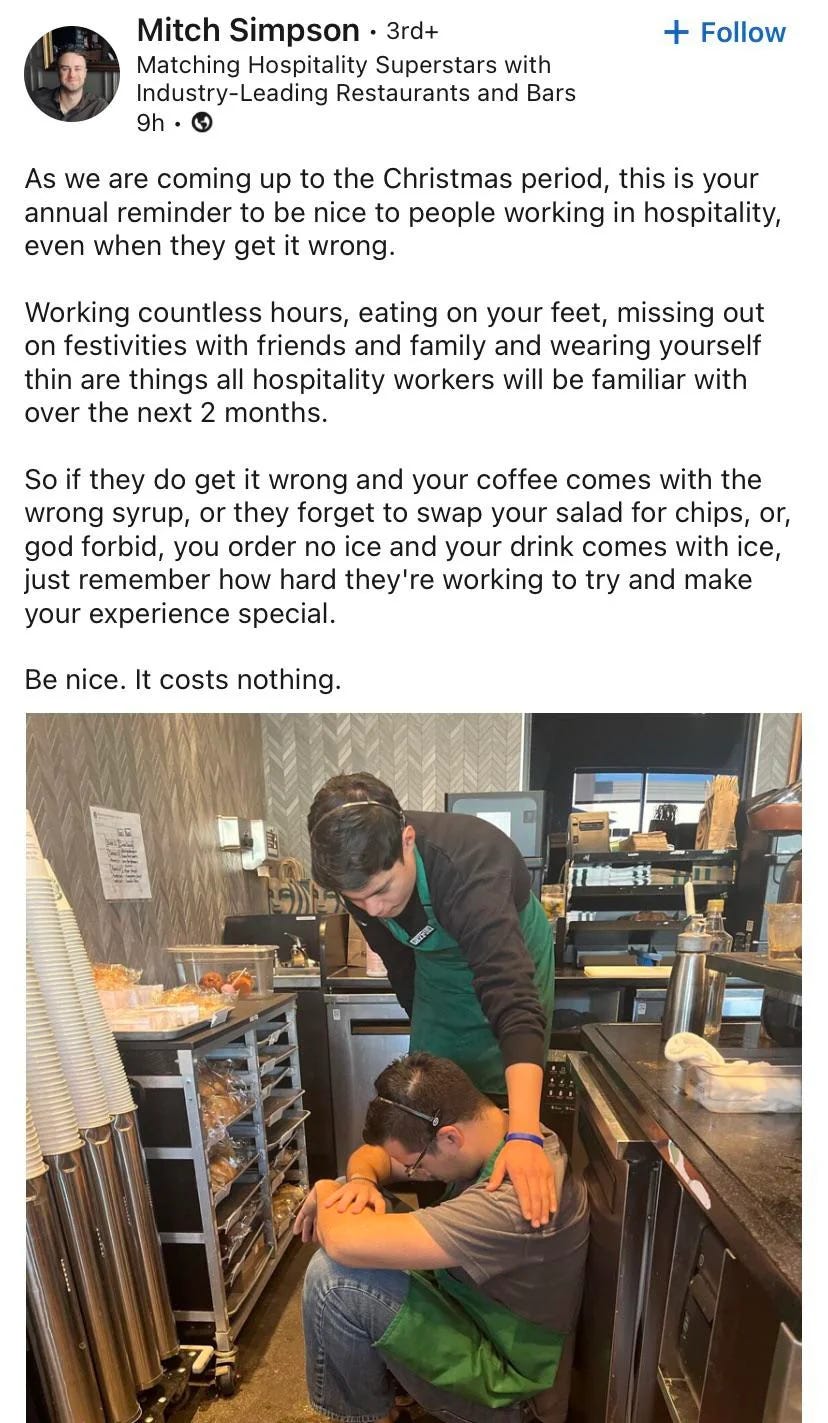
The earnest Linked-In post “inspired” by it:
How a business presents itself online—indeed, how a business uses the medium in general—holds lessons for individual humans who need to present themselves to others, whether professionally or personally.
So I’ve written a clickbaity listicle of eight of them:
Never mistake objects for objectives
One of the many reasons I’m not a rich man is that the first question I ask people who offer me money for a website is: “Do you really want a website?”
When they’re puzzled by this, I then ask them the real question: “What do you want to achieve?”
In the pursuit of a prize, it’s easy to mistake the shiny wrapping for its substantive contents. To keep your eyes on the prize, you have to be looking at the prize itself. Watch the ball, not the cup.
As I said at the start, shop windows need cleaning; they also need stocking. Do you want a virtual shopfront alongside your bricks-and-mortar one that you have no interest in tending, but that sucks up time that would be better spent doing your job well and generating positive word-of-mouth2? In an age of AI-generated mush, including fake online reviews, real people talking to one another has become almost as important as sellers talking to buyers. The higher the tech and bandwidth and the more diverse the communication channels available, the easier it becomes for actual human beings to connect—and the more intense those connections can be. The smartphone has put the tools and access of 20th-century global publishing empires into billions of pockets. The best way to recruit more customers is for your existing customers to do it for you, but a website can do even more work for you by answering the most frequently asked questions of those new prospects.
Back on the days of the paper office, when small businesses broadcast their offerings via printed paper and cheesy local radio ads, one classic white-collar solo start-up business error was to buy or lease a photocopier. The newly self-employed would take their savings or their redundancy money or their business loan and spend it ticking off items on their list of Things Every Office Needs; but they would often do so without first making a list of Things I Need To Serve My Clients’ Needs. The former was often just a docket of long-term liabilities in disguise, every one needing to be paid for before any profit was turned. Correspondingly, this delusion launched a long list of businesses eager to sign entrepreneurs up for such liabilities, businesses that were successful because renting out expensive stuff that you own and telling your clients they’re “essentials” is the opposite of accumulating liabilities. In a gold rush, you never lose money selling shovels.
Although a website can be a relatively cheap thing—in terms of money if not time—just as with a rented photocopier, the sort of people who value the trappings of business over the doing of business can end up spending vast sums on website that misses the point of their work—like the UK city council that paid external IT consultants millions of pounds for one so unusable that it couldn’t even tell its citizens “When Is Bins?”. It was so unusable that some of that council’s more tech-savvy citizens scraped content from the expensive unusable official template to create a usable online resource that only cost those citizens hundreds of pounds and that told them When Bins Is, plus lots of other useful information, in a far more accessible way. As the locals found more of what they wanted, more easily, on the citizen-built site, search engines noted that they spent more time time there and, directed more traffic to it, until the official website died a deserved, if temporary, death-by-irrelevance.
In business, real-world use tends to define value. In the public sector, power gained, not profit booked, is the insider’s preferred metric of success. Political leaders create statutory bodies to gain political advantage. Statutory bodies design their services to meet statutory requirements. Captured officials give contracts to provide those services—that they often don’t need to use themselves) to favoured providers and pay them for that work—with money that is not their own). Favoured providers become close enough to the officials hiring them that they write tender documents that match the language that those officials use and want to read—often with the help of former officials who now work for those providers. Outside of this bubble, real human beings need services to get things done in their real lives, and they are forced to pay everyone inside the bubble, whether they succeed in providing those services or not. The only motivation bubble-dwellers have to meet the needs of real-world outsiders is loss of power. So democracy had better be designed to keep them accountable.
Real-life parallel No.1:
Apart from the age-old personal folly of losing sight of what really matters because you care too much about what others think about you, you can see the same fundamental error in a thousand places in national and local government: Quangos are founded, departments are created; they are given impressive names; even more money is spent building buildings and filling them with paid employees; but their goals are far less well-defined than their titles, the metrics of their performance are loose, and so many livelihoods now depend on their continued existence in itself that these vested interests are motivated to keep them going even as they achieve none of their proclaimed goals.
Politicians and bureaucrats create such entities because ticking off items on their list of Things Every Leader Needs On Their CV3 is far more beneficial to their careers than delivering Things The Public Need From Their Servants. Such entities persist at great expense to voters because closing them down costs the jobs of the class of people who decide whether or not they should be closed down, and because they’ve been constituted in such a way as to be unaccountable to those annoying voters.
If you are a private business, you’re both unlucky to be accountable to your customers and lucky to answer only to yourself. If you are a private individual, you’re both unlucky to be accountable to your family and friends and moral code and lucky to have personal autonomy. Perhaps the hardest part of that autonomy is working out what you really want and cleaving to it when other opinions swirl around you. If you believe your goals are worthwhile, pursue them without trying to impress strangers. Keep your eye on the prize, not the wrapping.
Experts underestimate their everyday knowledge
Once I’ve agreed that I’ll build a website for someone, my next question is the proverbial royal one: “And what do you do?”
Skilled practitioners often find this as mystifying as the previous two questions:
CLIENT:
“I’m a plumber. Surely you know what a plumber does?”
ME:
“I think I know what a plumber does, but I’ve never done any plumbing, so I really can’t know what a plumber does. You do plumbing all the time, so you know what a plumber does, but you might not know how much you know. And there’s probably some plumbing you do that some other plumbers don’t; and there is probably some plumbing that other plumbers do that you don’t. Even more importantly, there are some kinds of plumbing you like doing and some kinds of plumbing that you don’t like doing. Perhaps there is a kind of plumbing you hate so much that you don’t want anyone, however much they offer you, to ask you to do it.”
There are three important things going on in this last model reply of mine, so I’m going to start with the first one, which is simply another list, and come back to the other two, which are Where The Magic Happens.
When did you last teach someone how to walk?
I used to be in a band with an outstanding professional bass-player. Let’s call him “Jimmy”. An already-classically-trained musician friend who saw our band play and was blown away by the Jimmy’s playing asked if our bass-player gave lessons. I asked Jimmy; he told me to give him her number and he would ring her to arrange a meeting.
To her puzzlement, and to my embarrassment, Jimmy kept fobbing her off or not contacting her. Eventually, he confessed that this is what he always did when people asked for bass lessons. He said he couldn’t take anyone’s money for tuition, because he was entirely self-taught from early childhood and honestly had no conscious understanding of how he played a bass, let alone how he played one so well, so he would be useless to her—or to anyone else—as a teacher.
Rick Beato is a talented musician in his own right, an ex-professor and producer of music with deep knowledge of its theory and practice. Via YouTube, he’s built a huge following by doing something that, ironically, professional music journalists have neglected to do for decades: He listens to popular music, observes the musicians who make it popular, and then talks about popular music. Because of this, I follow him too. It’s music that interests me about musicians. I couldn’t care less about writers’ and performers’ looks and clothes and drinking and drug-taking and political causes and relationship shenanigans and emotional “journeys”. [See: “When you get a chance, for God’s sake, take it”, below.]
Few YouTubers make much money; Beato is so popular that he must be making a serious income from his free channel content alone; he also sells his own music courses. He’s probably a pretty good in-person music tutor, but online learning is a very different matter. You have to be able to put yourself in the shoes of the person you are teaching, because it’s impossible for you to see in real time whether or not they understand what you’re explaining, impossible to get them to play back what you’ve just shown them how to play, and not always possible to respond to their questions in real time.
But, to put yourself in your students’ shoes, you have to be able to recall what it’s like to know as little as they do; you have to imagine your not to be blessed with the virtuosity that you have and that they seek. It’s a tiny tragedy that Beato’s decades-earned expertise, astonishing ear for harmony, and envy-inducing fluency on the guitar are not gifts suited to teaching in that medium, as this review claims.
The unnaturally talented can’t grasp how difficult it is for others to imitate what they do without thinking; worse, when such a person makes something look easy, onlookers risk believing the illusion, just as clueless lay observers watching 24/7 news are tempted to become armchair generals or armchair football managers or armchair presidents. Meanwhile, many people with genuine deep knowledge of their own domains—domains that, to them, are their everyday; domains that, to the media, hold no interest—take that deep knowledge of theirs for granted.
If you have hard-won niche understanding, one of the best ways not to fall into this traps is to write down what you know in a concrete form, if only so you can see how much of it there is. One of the most powerful uses of a website is as a repository of you and your organisation’s expertise. Thanks to search engines, your simply publishing a list of the things you can do for visitors to your site will bring visitors to your site. Explaining how you do those things on your site not only attracts even more visitors, it creates a resource that you yourself can consult or use to train your own staff—if only to create a list that reminds you of what you know.
Real-life parallel No. 2:
Even as you accumulate deep knowledge, you forget how much knowledge you have accumulated, how far your knowledge goes, and you find it harder to convey that knowledge to anyone else. As with knowledge in the workplace, so with wisdom in life. The world needs more mentors and it needs more mentors who have failed. Because no one learns anything from winning.
Many people—not narcissists!—fail to value themselves sufficiently because they are so wearily familiar with themselves that they take themselves for granted. (Almost) everyone has good qualities. Write yours down. Refer to the list when you are feeling bad about yourself. Try to make it longer and try to be even better at the things on it.
The outside-the-workplace converse of that curse is that the Internet makes it easy for people to acquire superficial insights into subjects about which they have strong opinions and persuade themselves they have understood things that others who have studied the same subject for decades know to be facile nonsense. The most horrifying recent example of this was the cult of ZeroCOVID that sustained so much bad policy during the pandemic.
Attract more of what you want and less of what you don’t
Now we come to The Other Two Things.
In a world of insanely optimised online merchants like Amazon, if all you offer is a commodity, globalisation doomed you decades ago. Someone else already offers it for less money than you can afford to sell it for and can deliver it faster. Your only hope is to offers something local, fresh, exclusive, elite, different.
It’s a truism that, as of now, no one can outsource hairdressing to China. But, if you can also dye hair a colour none of your competitors can, or if you specialise in fresh-flower wedding up-dos, your offering flips from local commodity to regional luxury: clients will travel (or pay you to travel) so that you can make them feel special. Online, you can magnify this effect, because, on the web, your particular services or combination thereof are search terms. Someone types “hairdresser” into Google and tens of hits appear; someone types “wedding hairdresser flowers” into Google and the results thin out. It’s the job of web developers to intensify that thinning-out (not of hair).
But it’s not just buyers thinning out sellers on the Internet; it’s sellers thinning out buyers. There exist business-to-business clients who do not want to waste their time offering their business to consumers, however much larger the margins might be on individual sales. In those cases, the job is to put their wares in front of the right eyeballs and hide them from the wrong eyeballs.
More fun than scaring off “time-wasting” enquiries, is tilting the mix of calls and emails generated away from the jobs my clients hate doing, and towards things they enjoy doing. It’s a boon of web development that you really can do that without having to offend anyone with a refusal—for real-life examples: a flooring contractor who hates tiling and would rather do carpets and an established comedy agency that wants industry movers-and-shakers to get in touch, but not up-and-coming comics.
Real-life parallel No.3
The life parallels in this particular bundle are more obvious—and the corresponding standard advice more well-worn: If you want to do a particular thing with your life, try to hang out with other people who have achieved that particular thing. Or, more generally, if you want to be a particular kind of person—not necessarily in the same social milieu or field of interest—then hang out with that particular kind of person, whether confident or go-getting or funny or just well-dressed. And to move in those circles, you have to signal your availability to them—or simply invite those who move in them to move into yours.
Obviously, this is harder in real life than it is online. No one you want to meet is googling “People who want to meet me”. But the same general principles apply:
Be clear about what you want and don’t want, both to yourself and to others.
Be easy to find.
Like a website, always be “on”. Yes, this is tiring, but it works.
Attention is not admiration
Once someone has a working website, they can become tempted to obsess about their visitor statistics. The data are myriad; the graphs are pretty; the available detail is seductive. They see their numbers go up and they want them to go up higher.
But businesses and charities and institutions have real-world goals. You can harvest large numbers of “interested” visitors simply by becoming the Internet’s first stop for pastry-themed pornography. A phone ringing off the hook with patisserie perverts is little use to you if your shop sells alloy wheels for classic cars.
If you are a small business, you don’t want tsunamis of irrelevant attention; and, equally, you don’t want to be Famous For Fifteen Minutes; you want to be Famous For Fifteen People, Forever.
Real-life parallel No.4
This time, apart from the analogy with the growth of pop-culture celebrity, the real-life parallel is almost too obvious: A few good, lasting business associates or friends are better than hundreds of “contacts”. Being a person that lots of other people have heard of is far less valuable than being a person that a small group of special people look forward to hearing from.
Elegance and results are orthogonal
And now we return to the Amazon. I used to obsess over clean and minimal design. One of my favourite (borrowed) insults was to accuse busy, brightly coloured, constantly moving websites of having “Clown Pants” layouts. I believed that, in the same way that no one focuses on the flapping multicoloured polka-dot baggies of a circus performer—and no one takes them or their wearer seriously—no one would focus on any online resources with the same aesthetic in the way they focus on the clean bold lines of a road sign or a good textbook.
As an early customer of theirs, over the years, I raged at the growing complexity of Amazon’s website. The front page is, of course, busy on any platform. Even search result pages are cluttered with paid-for listings. Every time you return, you are pestered with more of the same products you’ve already bought. And there is no let-up in Amazon’s crusade to sell you Amazon, whether that’s Prime or Kindles or Basics or Fire or Alexa or Music or…
I’ve calmed down about this for at least three reasons:
The first and most obvious is that Amazon is not a small business any more, and, whatever some corporate smuggo on LinkedIn will try to tell you, what works for small businesses is often irrelevant to what works for vast ones. Jeff Bezos is no longer sitting in a warehouse, printing out delivery labels himself. Amazon is an 800-pound gorilla. Amazon is a unicorn. Amazon is a kaiju. Most of its visitors aren’t coming to the site via that busy front page, but from search; many of them are, indeed, coming to buy more of the same; many of them are just clicking Buy It Now. They don’t give a flying delivery drone about elegance; they just want what they want as soon as inhumanly possible. Amazon doesn’t need to tell anyone what Amazon is and doesn’t need to win prospective customers over with a slick, streamlined pitch.

[I really do have a client who is a professor of commedia dell'arte.]
The second is, as someone who works on the other side of the monitor screen, and someone who cannot gainsay the company’s astonishing success in growing market share (at almost any cost), I know that Amazon is only making their website more complicated because making their website more complicated is making their business more successful. They Do It Because It Works For Them. And it can only work for them if, on some level, it works for their customers. Something about the way the site is laid out is making visitors more likely to lay out cash. I guarantee there are user-interface data analysts metaphorically looking over the shoulder of everyone buying everything to see exactly what is making them buy more stuff and recommending that Amazon does more of whatever that is.
The third isn’t Amazon-specific: For a big online business, busy-ness is sticky. Even though Facebook has a much calmer colour palette it’s basically clown pants in blue; it’s clown pants that’s friendly to the colourblind and appealing to your gran. And, even though her home is full of polychromatic florals, she hangs around in the Facebook blue room because it’s crammed with shiny objects like her parlour display cabinet: from delicious local gossip to comforting nostalgia to pleasingly irritating political ragebait.
As for Facebook, so for the BBC. When I visit the Beeb online, I have a goal in mind. I go there for news or I go there for sport or I go there to stream broadcast content. But, now, Big Auntie wants me to log in to track my usage; if I’m there for sport, she wants to pitch me news; if I’m there for news, she wants to pitch me sport; if I go there to stream one thing, she plugs another show at me. These huge domains—Amazon, Facebook, the BBC—aren’t so much sticky websites as digital tar pits.
So these shaggy giant corporations’ websites are the opposite of elegant. To the goal-oriented visitor they even do the opposite of sparking joy; but they also attract waves of traffic on a biblical scale.
Even if your website isn’t elegant, your business should try to be
None of the above is to dismiss the value of Keeping Things Simple. Small businesses, by definition, have a small number of personnel. The power multipliers of outsourcing and AI notwithstanding, this puts physical limits how much they can do. So, whatever Amazon is doing now, the right thing for a small business website is almost always to focus on doing a great job of the things that small business is great at delivering—and to forget about fighting kaiju.
Indeed, one of the few ways a commodity retailer can compete with big online rivals, is to choose and stock a handful of products, be the top hit on Google for those items—and for advice on how to use those items—and then make it simple and quick for visitors from search to buy those items from them, rather than from a big, scary alternative supplier. In that context, having an elegant-looking website is vital, because a new buyer needs to trust you on sight.
Real-life parallel No.5
There’s no universal lesson for individuals to take from these facts, except perhaps the cynical feeling that rich and famous people—like rich and famous Amazon—can be as messy as they like and remain popular, while the rest of us need to be at least a little more careful.
No one reads anything
If you also don’t want to read this, then here’s the…
…tl;dr
People will only buy what you’re selling if they can be sure it’s what they want to buy; you need to reassure them of this as quickly as possible or they’ll go somewhere else first. So, in life as in trade, your best hope of not being ignored for a rival is to Get To The Fucking Point.
The longer version
[The fun in this video starts at 1:23:53.]
I’m not going to go into great detail about the “No One Reads Anything” rule here, because I’m writing a long essay that no one will read dedicated to it4, before it’s promoted to the pantheon of Counsell’s Heuristics.
“No One Reads Anything” was one of my catchphrases in my previous life in biomedical research, and it’s ironic that this dog-simple epiphany hit me in academia, where reading things should be essential to the job. It’s even more relevant to web development, where no one is, even nominally, being paid to attend to the content that you are being paid to put before their eyes.
But it’s not difficult to believe or to understand why it’s important to building a presence online. The Web overwhelms with textual content. You could never read all of it, and would lose you mind if you had to read even just the written content that you see on purpose. As a vendor or creator, you have no choice but to tell everyone at your shop window what it is you can do for them. Once they know what’s in it for them, you have to tell them what they need to do to get that benefit from you: anything from their giving you money to reading your free explanation of how to fix the problem they have just googled an answer for.
If the search that brought them to you ends in a sea of undifferentiated plain text, they’re going to swim back upstream. Think about it: You would too. So much website-creating advice can be derived simply by putting yourself in the shoes of your audience.

Tick-tock, pitching time is running out
Today’s generational divide is between people who prefer to absorb information from short video and people who prefer the written word. Even video content from professional, supposedly respectable outlets like BBC has such low information density that I want it to play at double speed, in the doomed hope of its bandwidth getting closer to that of the written word; but it boggles my mind that there are millions of people who get all their current affairs and politics from TikTok, where I’m damned sure the density and correctness of the information are both another order of magnitude lower than the Beeb’s.
Yet even those who love to binge Reels in their leisure time will turn up at a vendor’s website and immediately shut down any front-page autoplay promo video—however proud the proprietor might be of his acting performance in it—because, if those potential buyers there on purpose, they’re there on a mission. TikTok watches users’ behaviour and gives them more of what it thinks they will like. Shoppers tell search engines what they want and they (mostly) give it to them straight (because, otherwise, they would go out of business), because, unlike with TikTok, they’re not scrolling to waste time; they’re at a seller’s shop window because they need to scratch an itch, and they want to be holding a brand-new backscratcher as soon as humanly possible. They haven’t set aside time on their mission to listen to the founder talk about his “journey” to building the ultimate loofah. Likewise, once they’ve found the page for the backscratcher in question, they don’t want to scroll through irrelevant boilerplate on it to check that what he’s selling fits their needs.
Writing trades the author’s time for the reader’s time. The longer you spend cutting your meaning down to its essence and making that essence clear, the less time your reader will waste understanding what you’re saying. But the Internet is an idea-multiplier: In theory, if you do this right once, millions will read it multiple times. The time you spend now will pay off in time saved later.
Real-world parallel 6
It’s perhaps sad, but it is true that, in real life, we are drawn to people who give us quick clear answers. This country has been lucky that its most extreme politicians have mostly been poor, rambling communicators. It helps that the awfulness of awful political ideas becomes obvious when they are written down in plain English.
But in our everyday lives we know that the smooth-talkers from Sales are more likely to get on in a business than the autistics in IT, regardless of their relative comptence. The lesson that human laziness rewards glibness is a grim one, but that doesn’t mean that people of substance should ignore it; quite the opposite: non-evil people must exploit the Highly Effective Habits Of Evil People.
So, when you do have to write something that you know most people will not read, because No One Reads Anything, whether for a work website or a personal communication that you want to get a result:
Keep it short.
Keep it simple. If you only write a little and it’s easy to read, there’s at least a small chance people will read and remember some of it.
Put the most useful information in headings, at the beginning, and at the end. If you’re lucky, people might read a few of these bits.
Speak it before you write it. This will make your prose direct; this will help you to hear the sound of your words in your visitors’ heads.
Price your time
A hugely popular and powerful AI video generator, OpenAI’s Sora became an overnight Internet sensation: Millions downloaded the app and used it to generate dazzling moving pictures; millions of individuals with no access to film-making resources or even AI data-processing resources could turn their whims into miniature movies. The amount of money those users were paying to use Sora to escape those limitations was out of all proportion to the compute time that it burned through. Sora became a monstrous burden on her creator—possibly a $15m-a-day burden. At which point, Prometheus put her out of his misery.
This brutal trajectory should inform every sole trader’s human-scale practice. Let me tell you, for example, a story about a business-to-business wine merchant who very much enjoyed educating his, mostly restaurant, clients in the vast complexities of making, storing, serving, tasting, and enjoying wine. He was a genuine expert and enthusiast. And he wanted to bring his knowledge not only to professional sommeliers, but to the masses. He wanted me to help him create a website through which individual private wine buyers could contact him directly for advice, so that he could talk them through recommendations over the phone, perhaps for a special port for a beloved grandparent about to turn 80 or for the correct sequence of wines to serve with the food courses at a fancy wedding, or even just to help those dining at the restaurants he served to make more imaginative choices.


I listened attentively and patiently; then, when he had finished outlining his vision, I took to the literal back of an envelope to crush his dreams. Even on a successful sale of a fancy port, after postage-and-packing, the profit he would make put a value on the time he would spend giving advice of less than the UK minimum wage, even before all his other overheads were deducted. And that’s even before accounting for the distracting nature of dealing with people ringing him at random times when he was busy doing more profitable things with his time or the energy needed to task-switch afterwards. His putative website wouldn’t merely be a time-suck in itself; opening it to the public would be like releasing a bag of Red-Bulled squirrels onto the landscape of his working day.
Small business websites should be saving small businessmen time. Long before anyone traded on the Internet, the Internet was home to Frequently Asked Questions. These plain-text reference works existed to save members of bulletin boards and Usenet newsgroups from having to answer the same old questions about a particular subject from newbies and drive-by visitors. If you are business owner, every time someone gets the answer to a common question from your website, they are not taking up your time on the phone. Your website can answer that question for hundreds of people, 24/7. You only had to type it in once.
One of the greatest boons of websites is that they can save you time: They can answer common questions you have answered a hundred times while you are doing the uncommon things that your specialist knowledge and skills enable you to do.
Real-world parallel 7
I don’t like the contemporary smartphone social culture in which no appointment is an appointment, in which every date is provisional, because everyone is always holding out for a better option; but it’s a repeated and brutal reminder in everyday life of the economic concept of opportunity cost. When you choose to do something now, you simultaneously choose not to do everything else you could do.
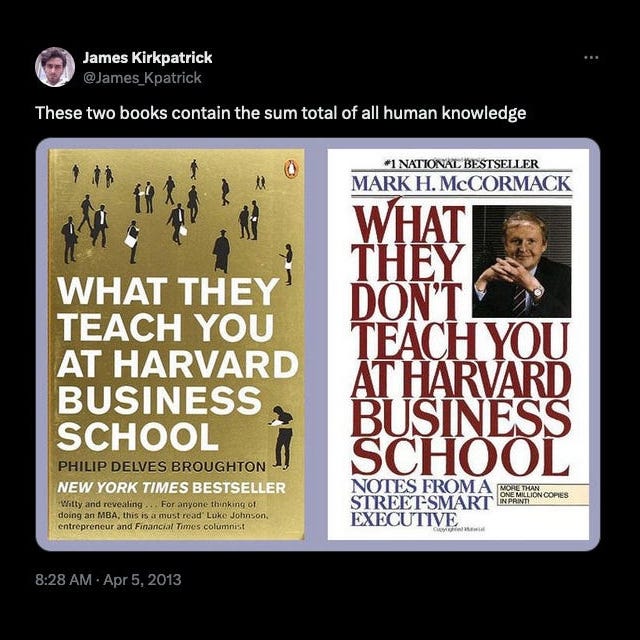
In business, you can usually make the choice by choosing to do whatever has the higher hourly pay-off. In life, the choice is (rightly) harder. When a a better offer comes along after a commitment has already been made to someone else, good people value their own good conduct over their own good times.
But an even harder choice is the question of how you should spend your own non-working time. I can’t answer that question for you, but I can tell you that doing any kind of self-directed work should remind you that, in a finite lifespan, you have to make choices, and that, to make them, you need to find your own metric—not money—to compare the lasting personal rewards of one choice against those of another.
The very fact that many self-employed service-providers charge by the hour should remind you that your time has a value—indeed, clients often pay providers to do things that they themselves can do in order to save their own free time, and such arrangements should remind you that, outside the context of work, you shouldn’t let other people waste that valuable time.
When you get a chance, for God’s sake, take it
These days, the non-specific website banner ad seems as anachronistic as the sound of the Pearl & Dean theme tune in a cinema. Banner ads still exist in sense of occupying the same kinds of spaces on webpages; but, if you don’t use an ad-blocker, you have almost certainly have noticed that they are now personalised. All around the thing you are really interested in looking at, the retailers you’ve already bought products from display images of more products like the ones you’ve already bought from them.
You might be surprised that I don’t routinely use an ad-blocker myself. This is mostly because I want to see the Web unfiltered—correction: I need to see the Web unfiltered for work reasons. One result of this combination of publishers’ targeted their advertising and my raw-dogging the Internet is that I occasionally click on banner ads. Then, I am often gobsmacked to discover that they either go nowhere or that the website that they take me is broken. Somebody has paid real money not only to discard potential customers, but actively to annoy them. This is madness!
And that’s just the big boys on big websites. Routine users of social media see, every day, tens, if not hundreds, of targeted ads from providers they’ve never heard of. Because I’m interested in making and performing music and media, Instagram bombards me with short videos from service providers who want me to pay them to record video for me, to mix music for me, and from creators who want me to stream their songs, to go to their gigs, to buy their merch.
By the time I see these, their sponsors have done the hard part: They have elbowed past literally millions of others competing for my attention directly into the centre of my field of view. But what happens now that, for example, a singer-songwriter has fought his way through the crowd to the stage and I am staring at his sales pitch? So often, to my intense irritation, he spends the first few seconds of the time he has bought from me with his own hard-earned cash rambling about his feelings, about how the song that he wrote that he’s about to play for me means so much to him.
Reader, I am never going to hear his song, because I have flipped from being eager to hear his music to rolling my eyes at having to listen to his navel-gazing psychobabble instead. He’s not only wasted his own time; he’s committed a graver sin: He’s wasted my attention. I am gone. Everyone on the Internet is hovering over the “Skip Ad” button; I had moved my finger away for him, but he made me slam it down.
If, on the other hand, the first sentence out of his mouth had engaged me even slightly, I would have stuck around for the substance, for the product. If the content of his preamble, however irrelevant, had entertained me in any way, I would have stuck around for the show. It’s difficult to express how catastrophic a fumble this is.
When you are simply getting things done at work, you’re not simultaneously explaining yourself to prospective customers; you’re simply trying to deliver results.
Real-world parallel 8
Of the eight lessons to take from trading online, this is the easiest to map onto the real world. No one goes through life without ruing at least one missed opportunity. It’s true that, often, opportunities are not obvious when they arise. On the Internet, when someone clicks on your banner ad, but doesn’t buy what it was selling for you, you know you’ve missed out—if not always why you’ve missed out. In real life, you’ll never know when someone started out liking you, but was put off by a joke you thought was a zinger.
But that’s not the kind of missed opportunity I’m offering advice about here. I’m talking about invitations to perform where the potential is obvious; and I’m telling you that, when you win one of these, because someone clicked on your metaphorical banner ad and wants the website they’ve clicked through so they can buy what you’re selling, you need to turn the fuck up. You don’t have to perform perfectly; you don’t have to be at your best; but, if you’re absent or late or you fail completely to deliver for want of basic preparation, then your loss is your fault.
The Fulfilment Department
Once again, writing a Substack piece drove me to distraction by spawning new examples and triggering new ideas. To take my own/Pascal’s advice, I had to discard paragraph after paragraph to get here. Perhaps that’s the broadest, crudest lesson to take from the world of exchanging product for cash: If you want to ship you have to chop. So often in life, as in work, you need to prune back to your core offering just to get things out of the door. The options are infinite; your life is not. Make what you choose to fit in count.
FAB FACT: Lingerie and sex-toy chain Ann Summers fought off a private action to have its branch windows blacked out like those of licensed sex shops
It’s a cliché of web development that good web developers have bad websites because they’re too busy building websites for other people to work on their own—in the same way that good builders never get round to finishing their own kitchen refits.
Ironically, this means that politicians and bureaucrats are being more rational in ticking off items on their lists of Things Every Leader Needs On Their CV than small business owners are in ticking off items on their lists of Things Every Office Needs, because at least the politicians and bureaucrats are acting in their own long-term interests.
The reason I’m writing at length about it elsewhere now is that No One Reads Anything is also one of the longstanding failings of literate human beings that make the widespread adoption of artificial intelligence in the workplace so dangerous.